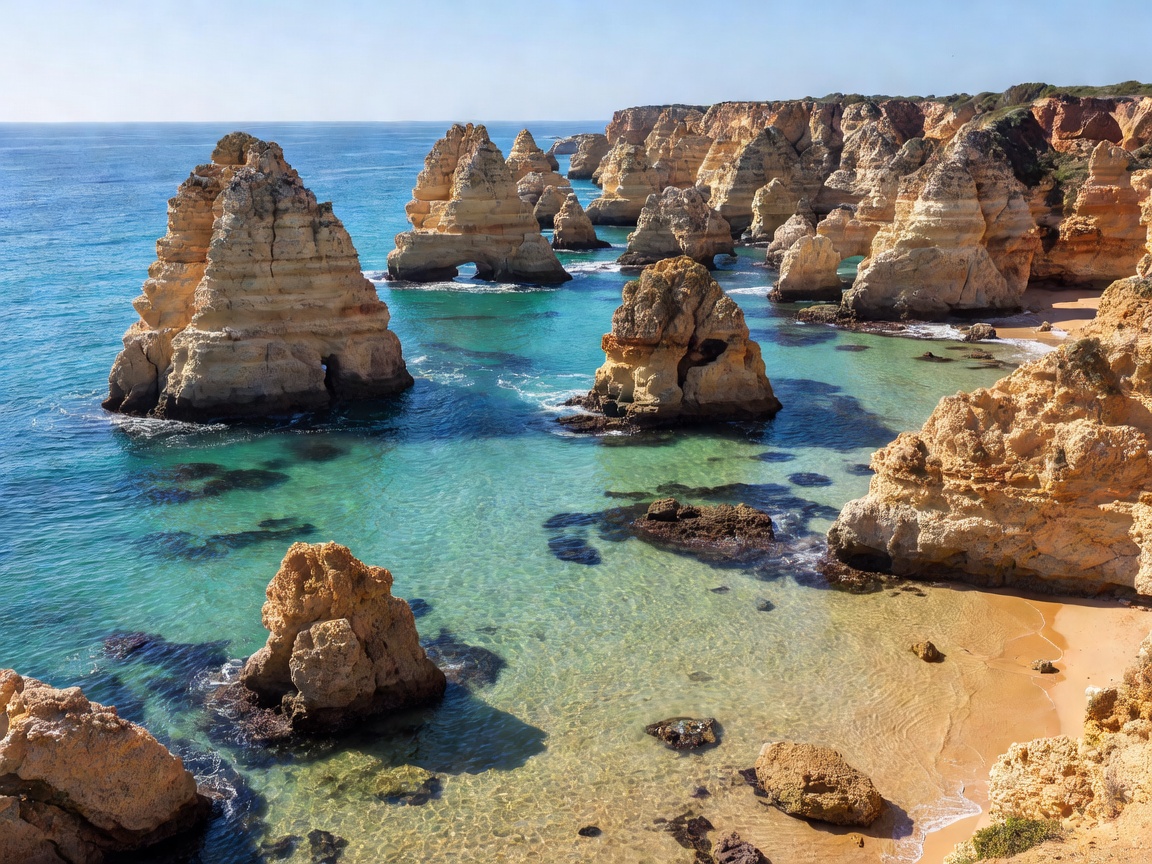
Along the southernmost hem of the Iberian Peninsula, millions of years of surging Atlantic hydrodynamics have sculpted Miocene limestone into a cathedral of golden arches, submarine blowholes, and colossal sea stacks known as Ponta da Piedade.
The Geology of Miocene Karst Formations
Unlike the dark, volcanic basalts of the Azores or Madeira, the coastline extending east from Sagres toward Faro is predominantly composed of sedimentary biocalcarenite and soft limestone. Deposited during the Miocene epoch when shallow tropical seas covered Southern Portugal, these strata contain dense concentrations of fossilized oysters, sea urchins, and coral reefs.
Over the past two million years, ocean swell energy concentrated along fractures, gouging out deep fractures known as algares (sinkholes) and caverns. When the roofs of these caverns collapse under hydraulic backpressure, dramatic freestanding rock pinnacles (leixões) are left isolated in the surf.
Trekking the Seven Hanging Valleys Trail
The definitive foot traversal of this coastal stretch is the Percurso dos Sete Vales Suspensos (Seven Hanging Valleys Trail), an 11.4-kilometer return journey tracing the jagged cliff tops between Praia da Marinha and Praia de Vale Centeanes.
Each "hanging valley" represents the ancient mouth of a seasonal freshwater stream that was severed by rapid coastal cliff erosion, leaving the stream bed suspended meters above sea level. Highlights of the route include:
- Praia da Marinha: Consistently rated among the most picturesque beaches on Earth, famed for the iconic 'M' double sea-arch.
- Algar de Benagil: A gigantic domed sea cave with a circular eye in its roof, accessible by kayak or paddleboard from the nearby beach.
- Alfanzina Lighthouse: A historic 1920s maritime beacon standing atop a promontory riddled with underwater blowholes.
Field Advisory: Navigating Tides & Cliff Stability
Limestone cliffs in the Algarve are subject to natural, spontaneous rockfalls. Always observe trail barriers, remain at least 15 meters from cliff edges, and verify the Portuguese Hydrographic Institute (Instituto Hidrográfico) semi-diurnal tide tables before entering low-clearance sea caves.
Subterranean Ocean Navigation: Sea Kayak vs. Traditional Dory
While walking the high ridges delivers breathtaking panoramas, the intricate network of caves can only be fully appreciated from sea level. Traditional wooden fishing dories—manned by local mariners whose families have navigated these grottoes for generations—can slip through narrow gaps like the Catedral and Garagem dos Pescadores.
For experienced open-water paddlers, launching a sea kayak at dawn from Praia do Barranco do Martinho provides absolute silence, allowing you to hear the resonance of Atlantic swells pushing compressed air through unseen fissures in the rock.
Plan Your Algarve Coastal Expedition
Speak directly with our Lisbon-based coastal route architects for private tide charts, certified guide escorts, and cliffside heritage lodging.
Inquire with Specialist